
A supplier tells you the minimum order quantity is 50 wigs. You want three styles in two lengths each. Can you buy 50 units altogether, or must you order 50 of every combination?
The answer depends on the supplier’s rules. Some minimums apply to an entire order. Others apply to each style or stock-keeping unit, known as an SKU. Custom colors, materials, and branded packaging may have separate requirements.
There is no universal MOQ for wholesale human hair wigs. The useful question is not only “What is your minimum?” It is “Which products count toward that minimum, and what conditions apply?”
This guide shows you how to read an MOQ quote, compare mixed orders, and choose a quantity that fits your business.

MOQ stands for minimum order quantity: the smallest quantity a supplier will accept under a particular set of terms. A wholesale wig MOQ may apply at several levels.
| MOQ type | What it may mean | What to confirm |
|---|---|---|
| Per order | A minimum across the complete purchase | Which products can be counted together? |
| Per style | A minimum for each wig style | Can lengths or colors be mixed within that style? |
| Per SKU | A minimum for each distinct specification | How does the supplier define one SKU? |
| Material MOQ | A minimum purchase of particular hair, lace, or another component | Must the material be bought separately, and how is the minimum measured? |
| Packaging MOQ | A minimum for labels, boxes, or other branded materials | Is it separate from the wig quantity? |
Consider a hypothetical example. You want three wig styles, each in two lengths. The supplier requires 10 units per SKU and treats every style-length combination as a separate SKU. Your minimum purchase would be:
3 styles × 2 lengths × 10 units = 60 wigs
The result could change if the supplier allows both lengths of a style to share one minimum. Ask for its SKU definition and counting rule in writing.
A material MOQ may be measured in a unit other than finished wigs. Do not add it to a product MOQ as though both numbers represent the same thing. Ask what material you must purchase, how much your order will use, and whether any unused amount can be held for a future production run.
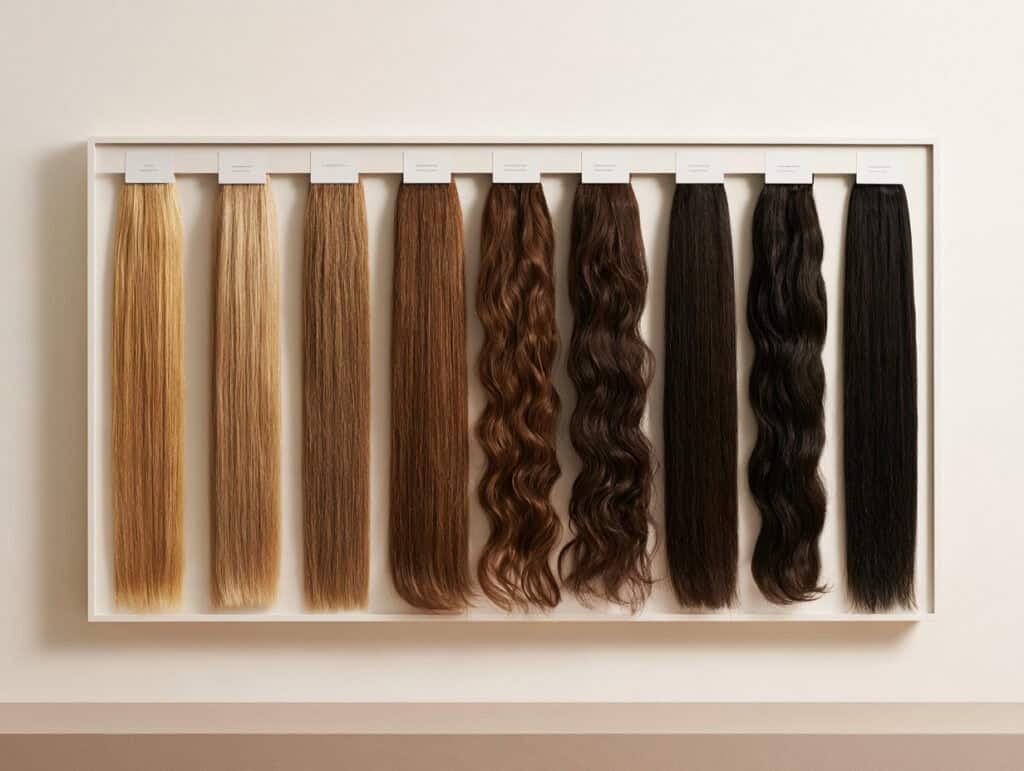
A supplier’s minimum can change based on the product and how it is prepared. The following factors help explain why two offers may look different; they do not establish an industry standard.
A supplier may have finished wigs ready to ship, partly completed wigs that can be finished to your specifications, or products made only after an order is confirmed. Each arrangement can have different quantity and lead-time conditions.
Ask whether the item you want is available now. If it is, confirm the exact length, color, density, lace, and cap construction. “In stock” is useful only when the available wig matches what you intend to sell.
For a made-to-order product, ask which production steps begin after approval and whether the first purchase and future reorders follow the same minimum. MOQ is only one part of evaluating a wholesale wig supplier; you also need to confirm what the company can deliver consistently.
A request for one style in one length is different from an order spread across many textures, colors, densities, and cap sizes. Each variation may become its own SKU. Some combinations may require separate preparation or production planning.
The product name alone will not tell you how the minimum is calculated. Give suppliers a list of the exact combinations you want. Ask them to mark which can be grouped and which need an individual quantity.
A custom color, a particular lace type, or a specially made cap may require materials that the supplier does not already have in stock. Branded boxes and labels may have their own purchasing minimums.
These are possibilities to check, not rules that every factory follows. Request separate figures for finished wigs, materials, and packaging. Also ask whether leftover supplies or boxes can be retained for a repeat order, and under what conditions.
A mixed-SKU wholesale order contains more than one product specification. Suppliers may permit some combinations and restrict others.
| Product variation | Question to ask |
|---|---|
| Different styles | Can these styles count toward one order minimum? |
| Different lengths | Is there a separate minimum for each length? |
| Different colors | Can standard and custom colors be mixed? |
| Different lace types | Does each lace specification need its own quantity? |
| Different cap sizes | Can sizes be combined within a style? |
Ask for a quote showing the quantity and unit price of each SKU, followed by the total order quantity. That makes the supplier’s interpretation visible before you pay.
Also separate two questions that are easy to confuse:
The supplier might allow you to mix products in one purchase but calculate volume discounts separately for each style. Meeting an MOQ does not automatically qualify every item for the same bulk price.
If a mixed order is important to your opening assortment of wholesale human hair wigs, confirm the rule for both your first purchase and later replenishment. A trial arrangement may not apply to every reorder.

Standard stock and custom products call for different questions. Neither label guarantees a low or high MOQ.
| Item | Stock wigs | Custom wigs |
|---|---|---|
| Product availability | Based on existing specifications and inventory | Made or adjusted to approved requirements |
| Product options | Limited to what is available or readily finished | May allow more choices, subject to supplier capability |
| MOQ | Confirm the rule for the exact stock item | Confirm product and any material minimums |
| Packaging | Standard packaging may be available | Branded materials may have a separate MOQ |
| Lead time | Depends on actual availability | May include development and production |
Check which specifications a stock wig already meets. A low minimum has little value if the available density, cap size, or color does not suit your customers.
For custom orders, identify every requested change. Ask whether a new color, cap construction, or package affects quantity, sample work, price, and lead time. A supplier may accept a small product order while requiring a larger purchase of a custom component. Put these details in a wig sourcing brief before requesting quotes.
It also helps to distinguish three purchasing stages:
These are practical descriptions, not formal categories used identically by every supplier. Buying one sample does not mean the company will accept a one-unit wholesale order. Request the terms for each stage separately.
A low MOQ can help a new store test demand without committing to deep inventory. It can also free up money to try another length or texture. Those benefits matter, but they are not the whole purchasing decision.
Smaller orders may carry a higher unit price. Frequent reorders can lead to repeated shipping, receiving, and inspection costs. If a core style sells faster than expected, a small batch may run out before the next shipment arrives. On the other hand, a large purchase can tie up cash in slow-moving colors or lengths.
Compare the likely result over more than one order. As a hypothetical planning exercise, consider ordering 50 wigs twice versus purchasing 100 wigs in one order. Both approaches give you 100 wigs in total, but they differ in order frequency, shipping costs, inventory levels, and cash flow. The smaller batches may offer more flexibility, while the larger purchase may qualify for a different unit price. Neither option is automatically better.
Estimate your sales pace, available cash, replenishment time, and the consequences of running out. Then compare the two arrangements using actual supplier quotes. For a detailed calculation, include freight and other charges that apply to each proposed order. Our guide to wholesale human hair wig costs explains the wider expenses to consider.
Give every supplier the same specification sheet. Include the wig type, hair, length, texture, color, density, lace, cap, packaging, and desired quantities. Without that shared starting point, different MOQ figures may describe different products.
Request quotes for a trial quantity, your planned first wholesale order, and a realistic future volume. Ask the supplier to identify:
A comparison sheet keeps the answers together:
| Comparison item | Supplier A | Supplier B |
|---|---|---|
| Order MOQ | To be quoted | To be quoted |
| Per-style MOQ | To be quoted | To be quoted |
| Per-SKU MOQ | To be quoted | To be quoted |
| Mixed styles | Confirm | Confirm |
| Custom color MOQ | Confirm | Confirm |
| Material MOQ | Confirm | Confirm |
| Packaging MOQ | Confirm | Confirm |
| Trial-order price | To be quoted | To be quoted |
| Bulk price tiers | To be quoted | To be quoted |
| Repeat-order terms | Confirm | Confirm |
Do not select the lowest number in the first row and stop there. A supplier with a flexible total-order minimum might require more of each custom color. Another might allow a smaller trial but charge a different price on replenishment.
If an answer is unclear, send a proposed SKU-by-SKU order and ask the supplier to confirm whether it qualifies. Keep that written response with the final quotation.

A useful trial order tests the product and the working relationship. Instead of asking only, “Can you lower the MOQ?”, propose an opening order the supplier can evaluate.
You could start with specifications it already produces, limit the first purchase to fewer colors or lengths, or ask whether selected styles can be combined. Request a sample before approving production. If you expect to scale, ask how prices and minimums would change at higher quantities.
Be direct about what the trial must prove. You may need to check fit, verify that delivered units match the approved sample, or confirm the supplier can meet your schedule. That purpose helps you choose a meaningful quantity.
Once the supplier agrees to a trial-order exception, make sure the terms are included in the order confirmation. Record each SKU, quantity, unit price, approved sample, packaging, production timeline, and delivery arrangement. Confirm whether the same conditions will apply to your next purchase. A verbal “low MOQ is fine” leaves too much room for different interpretations.

The best order size depends on what your business knows about demand and how quickly it can replenish stock.
| Business stage | Main purchasing priority |
|---|---|
| New wig store | Test demand while limiting unsold inventory |
| Growing retailer | Balance unit price, cash flow, and reorder frequency |
| Established wholesaler | Maintain supply of proven styles and compare volume tiers |
| Private-label brand | Coordinate product, material, and packaging requirements |
For a new style, a smaller opening order may provide useful sales and customer feedback. For a proven product, repeatedly buying the smallest possible batch can create extra work or stockout risk. A private-label launch may need different quantities for finished wigs than for labels or boxes.
Look at your expected sales rate, available cash, and supplier lead time. Decide how much stock you can hold and how long you could wait for the next batch. Then choose a quantity tier that supports that plan.
Choosing human hair wigs with a low MOQ can be useful when smaller orders solve a real business problem, such as testing demand or managing limited storage space. The minimum quantity alone should not determine your purchase.
Send these questions with your product specifications:
Ask the supplier to show how its rules apply to your proposed order, not only to describe its general policy.
No single minimum applies to every supplier and product. Confirm the exact specification and whether the quantity is calculated per order, style, or SKU.
Possibly. Some suppliers may allow standard colors to be mixed, while custom shades have their own requirements. Ask which colors can count together and whether mixing changes the unit price.
They may have additional requirements for customized products, labels, or boxes. The finished wig and branded packaging can have different minimums. Request each condition separately.
A smaller purchase can limit unsold inventory, but compare unit price, repeated order costs, lead time, and the chance of running out. Choose a quantity that fits your sales plan.
A supplier may sell a sample before accepting a bulk order. Sample availability does not determine the minimum for a trial or later wholesale purchase. Ask for each stage’s terms in writing.
MOQ is not just about how many wigs you need to buy. It is about understanding which products count toward the minimum, how quantities are calculated, and what conditions apply to your order.
Before committing, confirm the specifications, mixed-SKU rules, material and packaging requirements, price tiers, and repeat-order terms. ProntoSource can help buyers organize those details and coordinate with manufacturing partners in China. Contact ProntoSource with your target styles, estimated quantities, and customization needs to discuss a workable sourcing plan.