
In wig procurement, lace is most often framed as a ranking question: HD Lace, Swiss Lace, and Standard Lace which is more natural, and which is more durable?
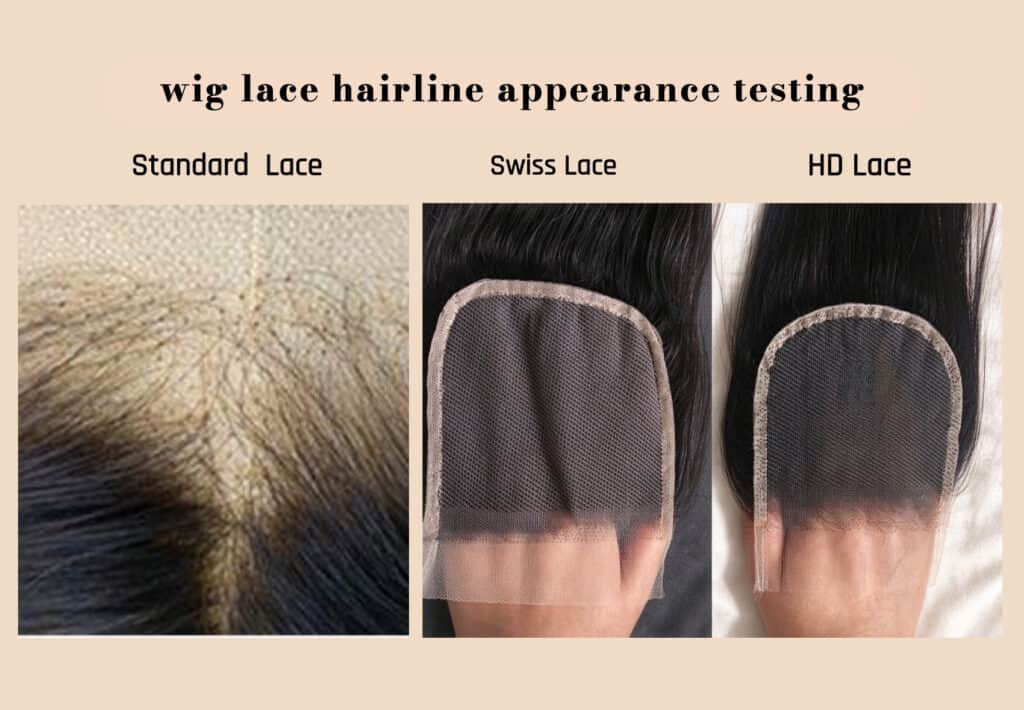
For brand buyers and product developers, this question itself can easily lead to misguided decisions. HD, Swiss, and Standard are often marketing terms, not universally applicable quality grades.
Materials all labeled as “HD Lace” may differ in mesh size, color, elasticity, edge strength, and attachment methods; “Swiss Lace” should not be interpreted solely by its name as indicating a specific origin or fixed specifications; and “Standard Lace” requires a clear specification of the exact material and structure—it cannot simply serve as a generic term for a basic model.
Therefore, the correct question is not which type is the highest grade, but rather: Who is this wig intended for? In what settings will it be worn? Who will install and remove it? What are the acceptable limits for appearance and durability? Only after answering these questions does the lace designation hold any practical significance for procurement.
Natural appearance is not determined solely by the thickness of the lace
A finer or thinner mesh may help reduce the visibility of the edges, but this does not guarantee that the wig will be more invisible after installation. Factors such as whether the lace color matches the skin tone, whether the knots are noticeable, whether the hairline density is too high, whether the hair growth direction looks natural, and whether adhesive or tape residue remains along the edges will all affect the appearance up close. Even the same lace style may yield different results depending on the installer, the wearer’s skin tone, and the lighting conditions.
Therefore, product development should not simply require suppliers to provide “HD Lace.” A more effective approach is to clearly define the desired outcome: Is the area of focus the hairline, the part, or the sides of the ears? Are the target customers those who will be photographed, perform on stage, or simply commute daily? What kind of edge appearance needs to be maintained under natural light, indoor lighting, or close-up inspection? These conditions determine how samples should be tested and help prevent a disconnect between catalog displays and actual wear results.
Durability is not defined by a single material label
The actual lifespan of lace is influenced by a combination of factors, including the mesh structure, knot treatment, cap attachment, installation tension, removal methods, cleaning frequency, and wearing habits. Edge tearing isn’t always caused by lace that’s too thin: excessive pulling, adhesive residue, stress on the sides of the ears, improper removal, or structural issues in the hair transplant area can all be root causes.
This means that finer lace is not necessarily unsuitable for daily wear, nor is more visible lace necessarily of lower quality. For products where a close-up hairline is a priority and professional installation and care guidance are available, lower visibility can be given greater weight; for products that require frequent putting on and taking off, self-maintenance, or emphasize error tolerance during handling, edge stability, connection structure, and care requirements should be explicitly included in the product definition from the outset. The goal of procurement decisions is to align with the product’s positioning, not to use a single label to replace risk assessment.
Before Requesting Samples, Frame the Question in Terms of Specifications
Regardless of whether the catalog lists “HD,” “Swiss,” or “Standard,” it is recommended to confirm the following details with the supplier:
- Materials and structure. What are the mesh characteristics, color options, elasticity, lace area, and connection methods for the temple and hairline?
- Finished product appearance. How are knot size, knot concealment or covering, hairline density, hair implantation direction, and parting areas defined?
- Intended use. What are the recommended installation and removal methods, care requirements, and situations where the product is not suitable?
- Permissible Deviations. What deviations are allowed between samples and production runs in terms of color, mesh texture, edges, knots, and finished appearance?
These questions are closer to real-world procurement tasks than simply asking whether a product is “HD,” and they enable factories, brands, and salons to use a common set of terminology when discussing the same product.
Sample testing must verify real-world usage conditions
Catalog displays can only assist with initial screening; they cannot replace physical verification. During testing, comparisons should be made under conditions that the target customer is likely to encounter: examine the hairline and parting under natural light, indoor lighting, and at close range; assess color blending against the target skin tone or under appropriate try-on conditions; observe the edges, deformation, hair shedding, and connection points according to actual installation, removal, and cleaning methods; and record the material description, sample batch, installation method, and results for each test.
If the product is intended for self-application by consumers, testing must include repeated wear, removal, and post-care conditions; if the product is intended for salon use, personnel familiar with the target application methods should participate in testing. Do not substitute a brief, one-time observation on the back of the hand for real-world usage scenarios.
Use the Confirmation Sample as the Basis for Acceptance of Production Batches
Once the sample is approved, the procurement process has only just begun. The approved sample, along with its specifications and batch information, should be sealed and stored; test conditions and results should be retained; and prior to placing an order, the scope of random inspections, allowable tolerances, procedures for handling anomalies, and methods for verifying replacement orders should be agreed upon. Otherwise, even if the first batch of samples performs well, it will be difficult to determine later whether discrepancies in the production run stem from materials, manufacturing processes, or standards that were not clearly defined from the outset.
For brands, the value of this process extends beyond simply selecting a more suitable lace. It reduces costs associated with rework, customer complaints, and after-sales service resulting from visible edges, color mismatches, tears, or discrepancies between samples and production runs. It also ensures that product pricing, care instructions, and service commitments better align with actual capabilities.
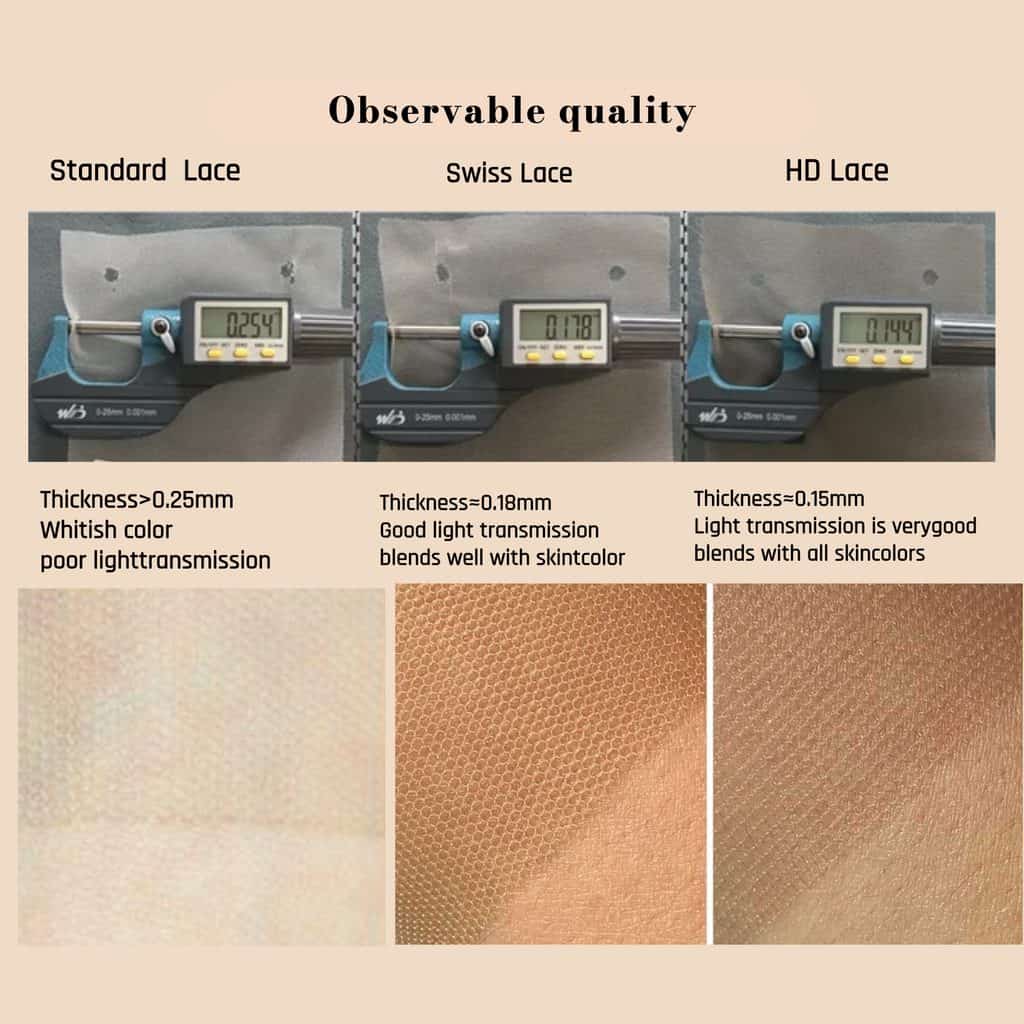
| Feature | HD Lace | Swiss Lace | Standard Lace |
| Thickness | Ultra-thin | Thin to medium | Medium to thick |
| Transparency | Highest | High | Moderate |
| Durability | Delicate | Durable | Most durable |
| Skin Blend | Excellent | Good with matching tint | Usually requires tinting |
| Best For | Photography and invisible hairlines | Daily wear and professional installs | Budget and beginner-friendly wigs |
| Price | Highest | Mid-range | Lowest |
HD, Swiss, and Standard Lace can help both parties initiate communication, but they should not replace specifications, testing, and acceptance procedures. First, define the target usage conditions; then compare samples; and finally, incorporate the confirmed results into the production standards.