Wig & Hair Product Sourcing in China | ProntoSource

A clear wig sourcing brief helps suppliers understand your product requirements, prepare accurate quotations, and reduce misunderstandings before sampling and bulk production.
This guide walks you through the key details to prepare before contacting wig manufacturers, from hair materials and construction to quantities, quality expectations, and delivery timelines.

Wig sourcing brief preparation with hair samples, lace materials, and product specification notes

Example: Turning a Product Idea into a Sourcing Brief

A clear product idea is only the starting point. Before requesting quotations, buyers need to translate that idea into specific, measurable requirements that suppliers can understand and evaluate consistently.


Initial Product Idea

“We need a glueless human-hair bob wig.”

This is a useful starting point, but it does not yet define enough specifications for suppliers to prepare directly comparable quotations.

Information to Confirm

Cap design, lace size and glueless features.

Hair material, length, density, texture and color.

Order quantity, sample approval, quality expectations and delivery timeline.

01/ BUILD YOUR SOURCING BRIEF

What to Include in a Wig Sourcing Brief

A well-prepared sourcing brief turns your product idea into clear requirements that suppliers can review, quote, and produce against.


01

Product Purpose

Target customer, market, intended use and product positioning.

02

Wig Construction

Cap design, lace type, cap size and construction details.

03

Hair Specifications

Hair material, length, density, texture and color.

04

Quality Standards

Sample approval, workmanship, testing and inspection criteria.

05

Order & Packaging

Order quantity, private labeling and packaging requirements.

06

Budget & Timeline

Target cost, sample schedule and expected delivery date.

BUYER’S TIP

Separate must-have requirements from preferences, and mark any specifications that still need confirmation.

How to Prepare Each Part of Your Sourcing Brief

01. Product Purpose & Target Customer

Define what type of wig you want to develop and who will purchase it. Include your target market, intended customer group, preferred price positioning, and the main purpose of the product.

Information to prepare:

  • Target market and customer profile
  • Wig category and intended use
  • Retail positioning and product concept

02. Wig Construction & Cap Design

Describe the wig’s construction as clearly as possible. Specify the cap type, lace material, cap size, hairline design, and any special construction requirements.

Information to prepare:

  • Lace front, full lace, or glueless construction
  • Lace type and lace color
  • Cap size and adjustable features
  • Hairline and parting design

03. Hair Material & Specifications

Hair specifications directly affect product appearance, performance, and cost. Clearly identify the required hair material, length, density, texture, and color.

Information to prepare:

  • Human hair or synthetic hair
  • Hair length and density
  • Straight, body wave, curly, or other textures
  • Natural color or custom color requirements

04. Quality Standards & Sample Approval

Explain how the finished product will be evaluated. Establish clear expectations for workmanship, hair quality, construction consistency, and sample approval before bulk production.

Information to prepare:

  • Hair shedding and tangling expectations
  • Cap construction and stitching quality
  • Sample approval requirements
  • Inspection and acceptance criteria

05. Order Quantity & Packaging

Provide your expected purchasing quantities and packaging preferences. If you need private-label products, explain the branding and packaging details before production begins.

Information to prepare:

  • Initial order quantity
  • Size, color, and style variations
  • Logo and private-label requirements
  • Packaging and labeling specifications

06. Budget, Timeline & Delivery

Set realistic expectations for pricing, sampling, production, and delivery. This helps suppliers evaluate feasibility and provide more accurate quotations.

Information to prepare:

  • Target unit price or budget range
  • Sample development deadline
  • Expected production lead time
  • Shipping destination and delivery requirements

02/ QUALITY & TESTING

Quality Standards and Sample Approval

Quality expectations should be clear, measurable, and agreed upon before bulk production begins.

Close-up of a dark brown human hair HD lace front wig with a natural middle part and pre-plucked hairline.

1. Define Practical Acceptance Checks

Before approving a sample, buyers should identify the product characteristics that need to be inspected.

01

Product Measurements

Length, net hair weight, density, cap size, and lace dimensions.

02

Color Consistency

Hair color and lace-shade consistency under agreed lighting.

03

Construction & Workmanship

Hairline, knot treatment, stitching, weft placement, and general workmanship.

04

Hair Performance

Sample approval, workmanship, testing and inspection criteria.

05

Washing & Styling

Wash performance, texture recovery, and styling response when relevant.

The brief should state which characteristics will be checked, what reference will be used, and what level of variation is acceptable.


2. Control the Sample Version

Every sample should be documented, reviewed, and approved before it becomes the production reference.

01

Sample Identification

Assign each sample a simple identifier and date.

02

Review & Feedback

Record photographs, measurements, and requested changes.

03

Final Sample Approval

Keep the approved sample, feedback, and final specification together.

04

Production Reference

Use the approved sample as the reference for the purchase order and pre-shipment inspection.

BUYER’S TIP

Avoid relying on vague quality promises.

A measurable limit, approved reference, or agreed remedy is more useful than a promise that a product will never shed or tangle.

Quality Standards and Sample Approval

Quality language should be specific enough for both sides to reach the same decision. Claims such as “no shedding,” “tangle-free,” or “true length” are difficult to enforce without an agreed test. A sourcing brief should identify the checks that matter for the product and explain how the sample will become the reference for production.

1. Define Practical Acceptance Checks

Before approving a sample, buyers should identify the product characteristics that need to be inspected.

Key Quality Inspection Points

  • Product Measurements: Length, net hair weight, density, cap size, and lace dimensions.

  • Color Consistency: Hair color and lace-shade consistency under agreed lighting.

  • Construction & Workmanship: Hairline, knot treatment, stitching, weft placement, and general workmanship.

  • Hair Performance: Combing, shedding, tangling, odor, and visible residue.

  • Washing & Styling: Wash performance, texture recovery, and styling response when relevant.

The brief does not need to contain a laboratory protocol for every point. It should, however, state which characteristics will be checked, what reference will be used, and what level of variation is acceptable.

Buyers should be careful with absolute claims. A measurable limit, approved reference, or agreed remedy is more useful than a promise that a product will never shed or tangle.


02. Control the Sample Version

Give each sample a simple identifier and date. Record the requested changes after every review, such as a lighter lace shade, lower density, revised cap fit, or different packaging.

When the buyer approves a sample, keep photographs, measurements, feedback, and the final specification together. The approved sample can then serve as the visual and physical reference for the purchase order and pre-shipment inspection.

If a later change affects material, construction, or appearance, approve a new version rather than relying on an informal message.

Information to prepare:

  • Lace front, full lace, or glueless construction
  • Lace type and lace color
  • Cap size and adjustable features
  • Hairline and parting design

03/ ORDER PLANNING & COSTING

Quantities, Customization, and Costs

Define your order quantities, understand customization requirements, and request quotations that can be compared on the same basis.


01 Define Order Quantities and MOQ

List the trial quantity by style, length, and color. Ask suppliers to confirm the minimum order quantity at each level.

01

Per Style

Minimum quantity for each wig style.

02

Per Length

Minimum quantity for each hair length.

03

Per Color

Minimum quantity for each color.

04

Custom Packaging

Minimum quantity for customized packaging.

Mixed Order Planning

Confirm whether different styles, lengths, and colors can be combined in one order.


02 Clarify Customization Requirements

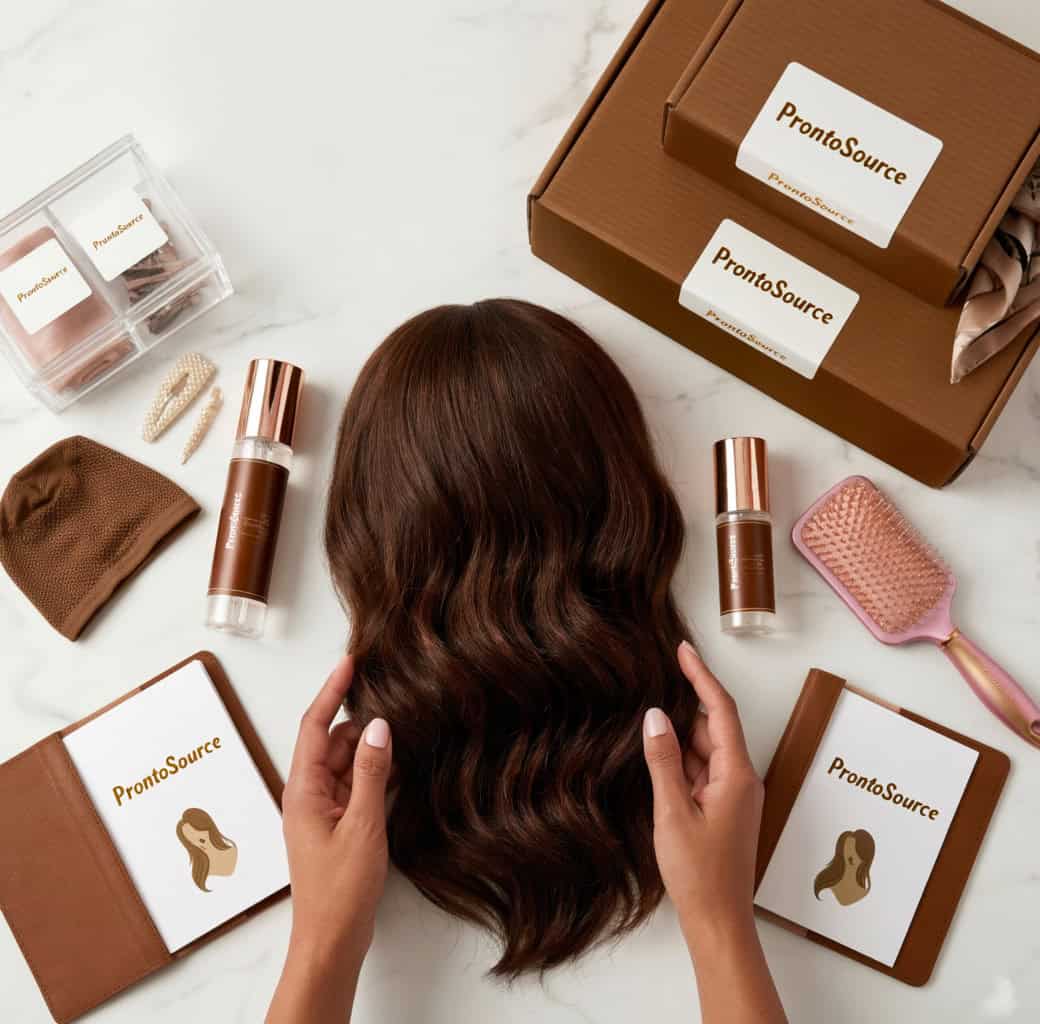
Private label brown human hair wig displayed with branded packaging, hair care products, accessories, and product information cards.

Identify customized products, packaging and branding requirements before requesting a final quotation.

Product Customization

Style, color and special processing.

Packaging Customization

Branding, labels and packaging.


03 Request a Comparable Quotation

Ask suppliers to separate the relevant costs and clearly state the commercial basis of each quotation.

QUOTATION COST BREAKDOWN

BUYER’S TIP

Compare quotations on the same basis.

Align product specifications, quantities, Incoterms and included costs before comparing suppliers.

1. Quality Standards and Sample Approval

List the trial quantity by style, length, and color. Ask for the minimum order quantity (MOQ) at each level: per style, per length, per color, and for customized packaging.

If mixed orders are important, state the proposed product mix and ask the supplier to confirm what can be combined. This is more useful than asking for a single company-wide MOQ.

Information to Confirm:

  • Trial quantity for each wig style.

  • Minimum order quantity per style.

  • Minimum order quantity per hair length.

  • Minimum order quantity per color.

  • Minimum quantity for customized packaging.

  • Whether different styles, lengths, and colors can be combined in one order.


2. Clarify Customization and Additional Requirements

If your order involves customized products or packaging, identify these requirements before requesting a final quotation.

Ask suppliers to confirm which customization options are available and whether they involve additional minimum quantities, setup charges, or longer lead times.

Make sure the proposed product mix and customization requirements are clearly documented so that suppliers can assess the order consistently.

Information to Confirm:

  • Product customization
  • Custom packaging
  • Additional MOQ
  • Setup charges
  • Longer lead times

3. Request a Comparable Quotation

Request prices on a clearly named basis, such as EXW or FOB at a named location, and ask the supplier to separate costs that are not included.

Relevant items may include:

  • Samples and product development.

  • Custom color and special processing.

  • Packaging setup and labels.

  • Inspection services.

  • Freight and insurance.

  • Destination charges.

The quotation should also show the currency, validity, payment terms, and the quantity on which each unit price is based.

A buyer can compare quotations only after the product specification and commercial basis are aligned.

Quotation Cost Breakdown

Cost Item What to Confirm
Samples & Development Sample and product development costs
Custom Processing Custom color and special processing
Packaging Setup charges and labels
Inspection Inspection services
Freight & Insurance Shipping and insurance costs
Destination Charges Charges at destination

Not all cost items apply to every order.

04/ TIMELINE & ORDER MANAGEMENT

Timeline and Order Confirmation

Set clear timing expectations and make sure the approved specifications, supplier quotation, and purchase order remain consistent before production begins.

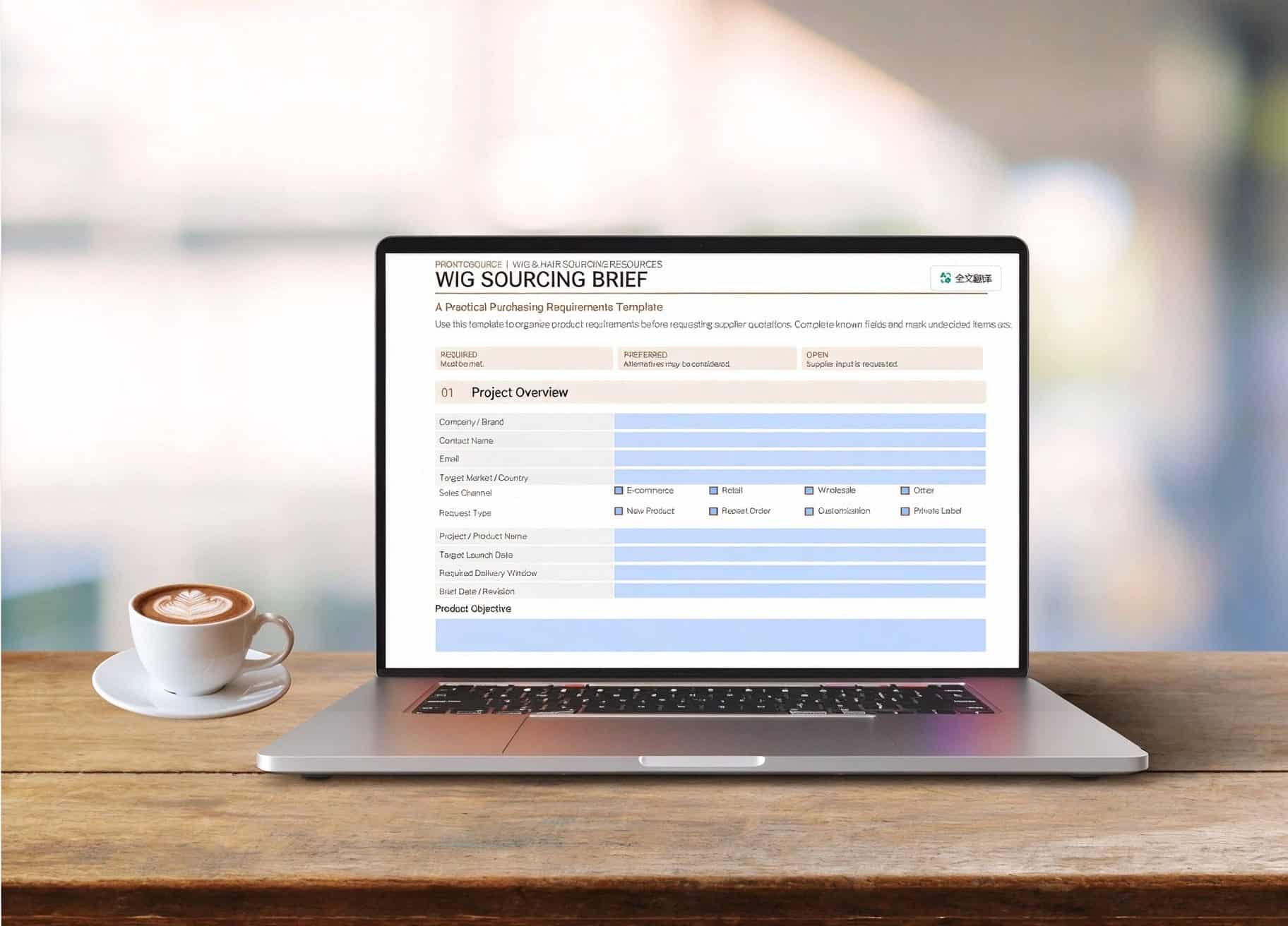
Laptop displaying a wig inventory restock planning sheet for tracking hair texture, length, quantity, color, style, and cost.

1. Establish Your Key Dates

Record the important dates before confirming the order.

01

02

03

Required Sample Date

When do you need to receive and review the sample?

Target Order Date

When do you expect to confirm and place the order?

Expected Delivery Window

What is your required delivery timeframe?

When Does Lead Time Begin?

Ask suppliers to identify the event that starts the production lead time.

Deposit received

Sample approved

Packaging approved

Materials received

The actual starting point should be confirmed with the supplier.


2. Align the Brief, Quotation and Purchase Order

The final purchasing documents should refer to the same approved product and commercial terms.

01

02

03

Approved Sourcing Brief

Final specifications and sample version

Supplier Quotation

Price, quantity, packaging, Incoterm, payment and lead time

Purchase Order (PO)

Approved specification number and sample version

BUYER’S TIP

Close or assign every open item before production.

A clear record keeps the approved product, quotation and purchase order aligned.

Timeline and Order Confirmation

A clear timeline helps buyers and suppliers coordinate sampling, order placement, and delivery expectations. Before confirming an order, record the important dates and identify the event that starts the production lead time.

01. Establish Key Dates and Lead-Time Expectations

Record the required sample date, target order date, and expected delivery window.

Ask the supplier when lead time begins: after deposit, sample approval, packaging approval, or receipt of materials. A production estimate that does not identify its starting point can create a misleading delivery promise.

Key Dates to Confirm:

  • Required sample date.

  • Target order confirmation date.

  • Expected production lead time.

  • Expected delivery window.

  • The event that officially starts the lead-time calculation.


02. Align the Sourcing Brief, Quotation, and Purchase Order

The final sourcing brief should be linked to the supplier quotation and purchase order (PO).

The PO can reference the approved specification number and sample version, while the quotation confirms price, quantity, packaging, Incoterm, payment, and lead time.

Before production begins, make sure every open item has been resolved or clearly assigned to the responsible party. This keeps the order consistent without turning the customer-facing sourcing brief into a full internal quality manual.

05 / BUYER RESOURCE

Downloadable Wig Sourcing Checklist

Use this checklist before sending a sourcing inquiry. Make sure your key product, quality, order, and commercial requirements are ready for supplier review.

WIG SOURCING CHECKLIST

8 Key Checks


01 / PRODUCT SPECIFICATIONS


02 / ORDER & QUALITY


03 / COMMERCIAL CONFIRMATION

Get Your Wig Sourcing Checklist

Prepare your requirements before contacting manufacturers.

DOWNLOAD CHECKLIST ↓

Downloadable Checklist

Use this short checklist before sending a sourcing inquiry. It helps you review whether the essential product specifications, quality requirements, order details, and commercial terms are ready for supplier discussion.

A separate specification or quality-control template can be used to record detailed measurements and inspection requirements.

Leave a Reply

Your email address will not be published. Required fields are marked *